Showing posts with label HOME CARE. Show all posts

Tuesday, September 1, 2009

Mosquito Mystery


Found this interesting article from Yahoo...maybe it'll be a great stress test for you.:)


"Finding Smells That Repel


-->
By SHIRLEY S. WANG
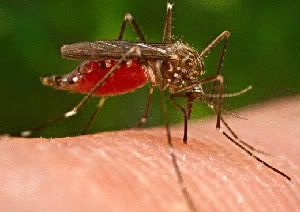
If you're one of those people whom mosquitoes tend to favor, maybe it's because you aren't sufficiently stressed-out.
Insects have very keen powers of smell that direct them to their targets. But for researchers trying to figure out what attracts or repels the pests, sorting through the 300 to 400 distinct chemical odors that the human body produces has proved daunting.

Michael C. Witte
Now scientists at Rothamsted Research in the U.K. have been making headway at understanding why some people can end up with dozens of bites after a backyard barbecue, while others remain unscathed. The researchers have identified a handful of the body's chemical odors—some of which may be related to stress—that are present in significantly larger concentrations in people that the bugs are happier to leave alone. If efforts to synthesize these particular chemicals are successful, the result could be an all-natural mosquito repellent that is more effective and safer than products currently available.

"Mosquitoes fly through an aerial soup of chemicals, but can home in on those that draw them to humans," says James Logan, a researcher at Rothamsted, one of the world's oldest agricultural-research institutions. But when the combination of human odors is wrong, he says, "the mosquito fails to recognize this signal as a potential blood meal."

The phenomenon that some people are more prone to mosquito bites than others is well documented. In the 1990s, chemist Ulrich Bernier, now at the U.S. Department of Agriculture's Agricultural Research Service, began looking for what he calls the "magic compounds" that attract mosquitoes. His research helped to show that mosquitoes are attracted to humans by blends of common chemicals such as carbon dioxide, released from the skin and by exhaling, and lactic acid, which is present on the skin, especially when we exercise. But none of the known attractant chemicals explained why mosquitoes preferred some people to others.
Rothamsted's Dr. Logan says the answer isn't to be found in attractant chemicals. He and colleagues observed that everyone produces chemicals that mosquitoes like, but those who are unattractive to mosquitoes produce more of certain chemicals that repel them.
Misguided Mosquitoes

"The repellents were what made the difference," says Dr. Logan, who is interested in the study of how animals communicate using smell. These chemicals may cloud or mask the attractive chemicals, or may disable mosquitoes from being able to detect those attractive odors, he suggests.

Besides delivering annoying bites, mosquitoes cause hundreds of millions of cases of disease each year. As many as 500 million cases of malaria are contracted globally each year, and more than one million people die from it, according to the Centers for Disease Control and Prevention. Mosquitoes can also spread West Nile virus, dengue fever, yellow fever and other illnesses.
Currently the most effective repellents on the market often contain a chemical known as DEET, which has been associated in some studies with potential safety concerns, such as cancer and Gulf War syndrome. It also damages materials made of plastic. The federal Environmental Protection Agency has determined that DEET, when used as directed, is safe.

The Rothamsted team set out to get the mosquitoes' viewpoint. The researchers separated human volunteers into two groups—those who were attractive to mosquitoes and those who weren't. They then put each of the volunteers into body-size foil bags for two hours to collect their body odors. Using a machine known as a chromatograph, the scientists were able to separate the chemicals. They then tested each of them to see how the mosquitoes responded. By attaching microelectrodes to the insects' antennae, the researchers could measure the electrical impulses that are generated when mosquitoes recognize a chemical.

Dr. Logan and his team have found only a small number of body chemicals—seven or eight—that were present in significantly different quantities between those people who were attractive to mosquitoes and those who weren't. They then put their findings to the test. For this they used a so-called Y-tube olfactometer that allows mosquitoes to make a choice and fly toward or away from an individual's hand. After applying the chemicals thought to be repellant on the hands of individuals known to be attractive, Dr. Logan found that the bugs either flew in the opposite direction or weren't motivated by the person's smell to fly at all.

The chemicals were then tested to determine their impact on actual biting behavior. Volunteers put their arms in a box containing mosquitoes, one arm coated with repellent chemicals and the other without, to see if the arm without the coating got bitten more.

Significant Repellency
The group's latest paper, published in March in the Journal of Medical Entomology, identified two compounds with "significant repellency." One of the compounds, 6-methyl-5-hepten-2-one, is a skin-derived compound that has the odor of toned-down nail-polish remover, according to George Preti, an organic chemist at the Monell Chemical Senses Center in Philadelphia, who is involved in a separate line of research into insect-biting behavior. The other, identified in the paper as geranylacetone, has a pleasant odor, though there is some question about whether the chemical is formed by the human biochemical process or is picked up in the environment, Dr. Preti says.

Dr. Logan declined to comment about the specific chemicals because of proprietary concerns. He says the findings have been patented and the group is working with a commercial company to develop the compounds into a usable insect repellent. One issue that still needs to be resolved: how to develop a formulation of the repellent chemicals that will stay on the skin, rather than quickly evaporating as they do naturally. The hope is to get a product to market within a year or two, he says.

Some of the chemicals researchers identified are believed to be related to stress, Dr. Logan says. Previous research has shown that these particular chemicals could be converted from certain other molecules and this could be as a result of oxidation in the body at times of stress, he says. However, it's not clear if the chemicals observed by the Rothamsted researchers were created in this way, and research is continuing to answer this and other questions.

Dr. Logan suggests that mosquitoes may deem hosts that emit more of these chemicals to be diseased or injured and "not a good quality blood meal." Proteins in the blood are necessary for female mosquitoes to produce fertile eggs, and Dr. Logan says it might be evolutionarily advantageous for mosquitoes to detect and avoid such people.

Other Research
Other research includes an effort by scientists at the University of California, Riverside, who published a paper in the journal Nature last week identifying a recently discovered class of molecules that inhibit fruit flies' and mosquitoes' ability to detect carbon dioxide. Mosquitoes can detect carbon dioxide emissions from long ranges, so turning off the ability to detect the gas, perhaps by releasing the inhibiting molecules into the environment, may be a way of keeping the bugs at bay, the researchers suggest. Another team, at the Monell Chemical Senses Center, is launching a study into whether the taste of human skin and blood are related to the insects' interest in biting certain individuals."

Saturday, June 27, 2009

TIPS TO GET RID OF PESTS SAFELY


Could anyone hurt this face? I couldn't...maybe if you took a strong enough magnifying glass, you might see this face looking at you.

Even though cute as a button we still do not want them in the house. You know those little feet have covered some square miles due to them been such diligent workers and you know the earth is not always a pleasantly clean place.


Also the commercial pesticides are not good for anyone, not for the pests, the animals that feed on them and for number one reason, you do not want those commercial pesticides to effect your children or other family members. I found an interesting article earlier this morning and though of cut and past the article for everyone to read about alternative methods that are non-toxic for everyone


Hopefully these tips that you'll find below will send those pesky pests flying!


"Cheap and nontoxic ways to get rid of bugs
By Huddler's Green Home Community Posted Tue Jun 9, 2009 9:28am PDT


Summer is the time for picnics, going to the beach, and barbecues. Unfortunately, it's also the time for indoor pests. Commercial pest control is full of nasty chemicals, even though there are natural ways to fight off many pests. Here are some ideas for ridding your home of creepy crawlies, without needing a hazmat suit (and of course, saving you some money).
Remember: The number one rule to keeping many bugs out is keeping the house clean. So don't let your dirty dishes pile up, make sure to sweep and vacuum, etc. Prevent any need for nontoxic pest control by using nontoxic household cleaners or even make your own homemade cleaners.

Ants
Vinegar can be used to destroy ant trails. Without clear trails, the ants will get confused and may stay outside for a while. You can use it diluted with water or straight. And, of course, vinegar is also a great household homemade cleaner, so not only do you get rid of the ants, you get some cleaning done too.
Cinnamon and black pepper are both increasingly being used in garden and indoor insect control. You can try dusting the outdoor nests with either of these spices. Cinnamon is more beneficial as a natural barrier to stop them from coming in -- it's most effective when you find the source of where the ants are coming in.
Add borax to sugar. Many people believe that you should use a 50-50 concentration, however, ultimately the goal is to have the ants bring borax back to their nests. Starting with a lower concentration such as 5% or 10% borax to sugar and gradually increasing it to 40%-50% will allow the ants to have more time to bring more back. The mixture should be placed where you see the ants or on the ant trails.
Baby powder or talcum powder is not appreciated by these bugs. The theory is if you dust the ants and the trail, they’ll stop coming.
Liquid soap diluted with water is an easy way to wipe out your pests while not harming your people. When used outside as a spray, you'll want to dilute the soap (such as Dr. Bronner's Organic Castile Soap) -- roughly 1 or 2 tablespoons per quart of water -- to kill the pests but not your plants.
Bay leaves, cloves, and cayenne pepper have long been used for ant control. Try putting one of these at their entry point, and in drawers, shelves, etc., where the ants are going, to prevent them from coming in.
Peppermint can be sprayed around your home's perimeter and at ant entry points. This will deter them from coming inside.
More resources: SimpleGiftsFarm.com, Sugar Ant Hotel from Care2.
Fruit flies
Clean up any ripe fruit droppings and take out the trash (or if you are a green superstar, your compost!) nightly for a few days -- fruit flies lay their eggs in overripe fruit.
Apple cider vinegar is a great natural way to get rid of fruit flies. Pour some into a glass, and place a paper funnel over the container. Fruit flies love the smell and will fly into the glass, but will not find their way back out the funnel (for 4 of 5 fruit flies...).
Leave a glass of cheap wine (apparently, fruit flies particularly like chardonnay) out. Mix a bit of detergent in it. The flies will sip on it and die shortly thereafter.
Make your own fly paper by boiling water, sugar, and corn syrup together. Spread the mixture on brown paper grocery bags and wait for the flies to stick.
Suck up flies through the back of an old hair dryer. The flies will go in the hot back end of the dryer and fry.
Basil deters fruit flies. Mix some basil oil with water and spray your kitchen.
Wasps
Make a trap from an old soda bottle to catch wasps. Using a 2-liter soda bottle, cut off the top 1/3 of the way down. Flip the top so that the bottle neck is facing down into the rest of the bottle. Tape or staple the bottle neck to the outside of the bottom piece so that it fits tight. Fill the bottle part way with soda or fruit juice. You could even line the top of the bottle with jam to help attract the wasps. Wasps will enter the bottle but will not be able to get out. Clean and refill the trap daily or as needed.
Remove the nest. If you find a hanging nest, wait until the wasps are less active (namely, at night). Carefully approach the nest. Put a cloth or plastic trash bag entirely over the next and quickly tie it off at the top. Remove the nest from wherever it is hanging, then submerge the bag under water and weigh it down with a rock.
More resources: EarthEasy, Get Rid of Things.

Slugs
Slugs can be a huge pest in any garden. They're fond of eating plants, shrubs, and mosses, much to any gardener's chagrin.
Fill small bowls with stale beer and place the bowls strategically in areas of the garden where the slugs are most active. Slugs apparently like stale beer, so they climb in to drink and they meet their maker (they drown in the liquid).
Other eco-friendly slug-fighting tactics include liquids that work similarly such as grape juice or a tea made from yeast, honey, and water.
More resources: Mother Earth's Garden

Huddler's tight-knit community of eco-minded consumers share their knowledge about sustainable products and services ranging from electric cars to organic toothpaste. This post was originally published at http://greenhome.huddler.com/wiki/pest-control. Click here to participate.
Related topics: , , , , "
Well now that you have red the article and the tips in it, do you have your own tips to share with us all?

Tuesday, June 9, 2009

WANT TO SAVE MONEY


I have been experimenting with making and using homemade laundry detergent; it is very easy to make and the cost is about .03 cents per load! If you do any amount of laundry this could save you some serious money . My two sisters and I have family members who get their clothes very soiled and smelly(Matthew works in landscaping) and their clothes come out very clean and pleasant smelling. Misty M. and Becky B. also tried it out and liked it as well.

If you would like to try it, just save your old liquid detergent or large vinegar bottles work well!

2 Gallon Liquid Laundry detergent


1/2 bar Feldsnaptha, Dove, or Ivory soap flakes

1/2 cup Washing Soda (NOT baking soda)

1/2 cup 20 Mule Team Borax

3 pints warm water

In a large saucepan, place 3 pints warm water and the soap flakes together, and heat on low . Stir until soap flakes dissolve. Add washing soda and borax, and stir until this mixture thickens. In a 2 gallon bucket, pour 1 quart of hot water, then add the thickened soap flakes to the bucket and stir well. Fill saucepan with more hot water and stir to use what has stuck to your pan. Fill bucket up the rest of the way with warm water and stir well. Let this sit for 24 hours or until thickened, then stir well again. Place in bottles if you wish..just stir well or shake it well before each use. If it is too thick, just thin with warm water. Use 1/2 cup for a normal load, 3/4 to 1 cup for heavily soiled clothes.

This does NOT suds up ...so, this can also be used in the high efficiency washers as well.

Note: You can make soap flakes with your cheese grater, in your food processor or order online. Avoid highly perfumed soaps. Mark and Ashley love to make soap carvings and do this for their chores! You can also double this and make it in a 5 gallon bucket and this works well also.

Enjoy!~Lori A.